


You have been sending out resumes for months, and all you get back is silence or a standard rejection letter. You check Djinni and DOU every day, but it still feels like the $5000+ jobs live somewhere else entirely. You are not wrong. The problem is not that the market is “oversaturated with candidates.” The problem is that you are looking for an international salary on local job boards, and that is like searching for a plane ticket on a marshrutka booking site.
In this article we will break down each platform specifically: where the $7000-12000 jobs actually are, how to set up your profile so recruiters find you first, and why one of the most effective job search tools has so far only been on your phone for dating.
Why are there almost no $10k jobs on Djinni and DOU?
There are. But that is literally the top 1-2% of the market. Djinni and DOU do have listings in the $7000-12000 range: Staff/Principal Data Engineer, Senior Cybersecurity Architect, architects with a niche stack. The market median in 2026 looks different though: a Senior earns around $3500, a Lead around $4500.
These platforms are great for outsourcing and the local market, which is why that is the kind of listing that dominates there. But if your target is an American or European product company that pays like the global market, Djinni and DOU will be your second choice, not your first. For western companies the logic is simple: a Senior Engineer in Ukraine at $10k costs them half as much as the same specialist in San Francisco. They are happy to pay “top dollar” locally, because it is still a bargain for them. That is the geo-arbitrage that the entire international career strategy is built on.

So Djinni and DOU are useful tools, just not where the five-figure paychecks live. According to the Stack Overflow Developer Survey 2025, developers in Central and Eastern Europe who work directly for western companies earn on average 2.3 times more than colleagues working through outsourcing.
LinkedIn is the Tinder of hiring. How do you actually use it?
Seriously. LinkedIn is a marketplace where a recruiter decides in three seconds whether your profile is worth opening. If it just says “Software Developer” or “Marketing Specialist” with no specifics, you are anonymous among thousands of other anonymous profiles.
Here is what actually works:
Step one is the headline. It needs to answer the recruiter’s search, not describe your current job title. Compare: “Software Developer” versus “Senior Python Engineer | FinTech | Highload | $100M+ scale projects.” The second one is an offer. The first is just a line in a database. One candidate got three inbound messages from recruiters within 48 hours of changing their headline, with zero extra experience needed to make that happen. If you are not sure how to write your bio, check out How to Talk About Yourself in English: Examples and Phrases and How to Sound Awesome on Social Media?, both have ready-made phrasing for your headline and profile summary.
Indeed: why do 90% of candidates use it wrong?
Indeed is the largest job aggregator in the world. It pulls listings directly from company websites, so it has jobs you will not find on LinkedIn or Glassdoor. It works especially well for remote roles at American and European companies.
Three features that change the game:
- Salary filter: set your minimum salary right in the search and stop wasting time on “salary negotiable.” You only see companies willing to pay your minimum.
- Company Pages: before you apply, check the company page and see real salary data by role, submitted anonymously by current employees. You walk into negotiations already knowing the number. That is what it means to negotiate from a position of strength.
- Indeed Resume: most candidates only apply to postings. The smarter move is uploading your resume at indeed.com/resume and setting your status to “Open to work,” so recruiters at American companies find you first. No years of networking required.
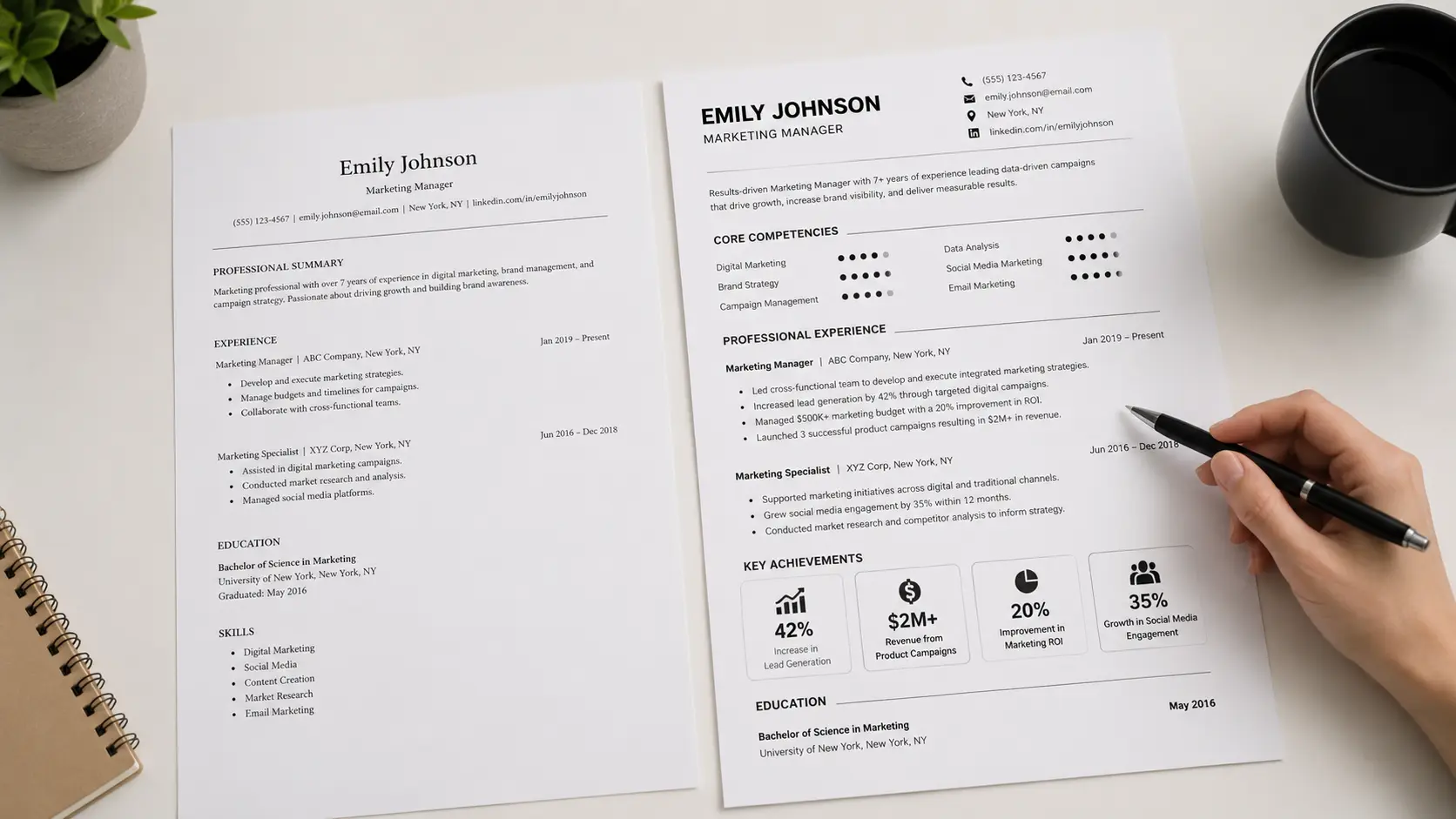
A search tip: instead of just typing the job title, add “remote worldwide” or “remote anywhere.” For example: “Senior Product Manager remote worldwide.” This filters out listings where “remote” actually means living in one specific state.
Glassdoor: how do you walk into an interview already knowing the recruiter’s questions?
Glassdoor is an intelligence tool. Most candidates know about it, but few actually use it systematically before every interview.
What is there and how to use it:
Salary Insights: enter the job title and company, and you see real salary data from anonymous employees. You walk into negotiations naming a specific number, because you know the market instead of guessing at it.
Interview Questions: candidates post the actual questions they were asked at a specific company. You are heading into an interview at Google, Amazon, or a European fintech, and you already know what comes up at the HR screen, the technical round, and the final. This is completely legal prep that almost nobody actually uses.
Company Reviews: before accepting an offer, read the “Cons” section on the company page. If you keep seeing “constant overtime,” “management does not listen to the team,” or “promises don’t get kept,” that is not one bitter candidate, that is the company culture.
The ritual before any interview takes 15 minutes: salary range, top 5 interview questions, the biggest cons from reviews. Those 15 minutes put you ahead of 90% of other candidates.
How do you find top companies hiring remote workers worldwide?
Most candidates think reactively: here is a listing, I applied. That logic worked back in 2020. Today the winners are the ones who build a target company list first, then go after those companies, even before an open role shows up.
Step by step:
Levels.fyi: if you are in IT, this site is mandatory. A database of real compensation at tech companies broken down by level: Junior, Mid, Senior, Staff, Principal. You see the full package: base salary, bonus, equity. The top 20 companies for compensation at your level become your target list.
LinkedIn Remote Filter: everyone knows the “Remote” filter, but here is the nuance. Set the company country filter (for example, United States) and add company size “200-1000 employees.” Large corporations often only hire on local contracts. Startups under 50 people are unstable. Companies with 200-1000 employees are mature products with real processes and genuine remote work.
Specialized remote platforms: We Work Remotely, Remote.co, Wellfound (formerly AngelList Talent), Remotive. These list companies that operate fully async and hire globally.

Direct careers pages: found a company you like? Set a Google Alert for “[Company Name] + hiring + remote.” You will hear about the opening before it ever hits the aggregators. Recruiters often close positions in 2-3 weeks.
Annual rankings: FlexJobs Top 100, Built In Best Places to Work, Fortune Best Workplaces in Technology. These are not PR pieces, they are companies that have publicly committed to a remote-first culture and are legally set up to hire people across different countries.
Build a table of 50-100 target companies. That is your personal hunting list. Work through 5 companies a day, and in a month you will have at least 5 active conversations with recruiters.
Tinder for job hunting: is this even serious?
Three years ago I learned about this approach in Tel Aviv, and I have been telling every client about it ever since.
The city is small and completely informal. Deals close over coffee, investments get discussed on the beach, and career opportunities show up on Tinder out of nowhere.
One woman moved to Tel Aviv and was looking for a product role. LinkedIn gave her the standard result: applications, silence, occasionally an interview that led nowhere. She rewrote her Tinder bio: instead of “love to travel,” it said “Product Manager. Looking to join early-stage startup in TLV.” The matches changed completely. Not “how’s it going,” but: “What did you work on at your last product?”, “We’re actually looking for someone like you,” “Let’s grab coffee on Rothschild, tell me more.” And there she was, sitting across from a founder who had just closed a funding round, no HR, no five rounds of interviews.
In Tel Aviv this is just part of the culture. It also works in Berlin, Lisbon, and a few other tech hubs. Try it if there is an active tech community wherever you are.
Why doesn’t a great profile convert into an offer without the right pitch?
Here is a case that probably explains this best. A finance professional came to StopFail after a string of rejections. Excellent specialist, genuinely knew his craft. But in interviews he sounded like a run-of-the-mill accountant. Asked “why should we hire you,” he would say: “Well, I closed out reports, tracked the balance…”
The problem was not his experience. The problem was how he presented it. If you describe yourself through job duties instead of business results, the market has no way of knowing how valuable you actually are.
The problem is never the experience. The problem is how that experience gets presented. If you talk about yourself without business results and specific numbers, the market has no way of knowing how good you actually are. After the repositioning, this finance professional now says: “I cut company costs by 15% and prepared the structure for a $5M investment round.” The difference? That is the difference between $2000 and $8000 a month.
Candidates who describe their experience through concrete results and numbers consistently make it further than those who list job duties. Recruiters are looking for proof of impact, not a task list.
Pitch Game from StopFail: where should you actually start right now?
If you made it this far, you already know where to look and how to set up your profile. But there is one thing without which none of these tools will work: you need to learn to talk about your experience in the language of business results, not job duties.
That is exactly what StopFail’s Pitch Game is built on. You practice getting on a work call, talking about your experience with the right words, and shifting the focus from “hire me” to “here is the value I bring to the team.” After this kind of prep, every platform starts working at once, because the way the market sees you changes.
Follow the link and try the Pitch Game format. $5000+ offers do not start with new experience, they start with a new pitch of the experience you already have.
Free 3-day self-presentation training
where you will learn to talk about yourself in English and sell your services on the international market for 3 times more.
Sign up
FAQ
Where is the best place to look for an IT job in 2025-2026?
For international companies paying $5000 and up, the most effective combination is: LinkedIn for networking and inbound recruiter messages, Indeed for direct listings from company websites, Glassdoor for prepping for specific interviews. Djinni and DOU are useful for outsourcing and the local market, but rarely lead to $10k+ offers.
How do you boost the visibility of your LinkedIn profile?
Check your SSI at linkedin.com/sales/ssi, find your weakest area, and work on it deliberately. Rewrite your headline around a specific role with results, not just a job title. Comment on posts from team leads and hiring managers in your niche, that gives you direct access to decision makers.
Is it realistic to get a job without fluent English?
Most international roles only require Upper-Intermediate (B2) level. But the problem is rarely grammar, it is more often that the candidate does not know how to present their experience in business language. That is the first thing worth training.
Why am I not getting invited to interviews even though I apply to dozens of jobs?
Most likely your profile or resume does not give a clear answer to the question: “How fast will this person start delivering value?” A recruiter spends 3-6 seconds scanning a profile. If it is not obvious what specific value you bring in that time, the message goes into the archive.
Where can you check real salaries for your role?
Glassdoor Salary Insights for specific companies. Levels.fyi for tech companies with full compensation packages. Indeed Company Pages for the broader market. Combine all three before any salary negotiation.
